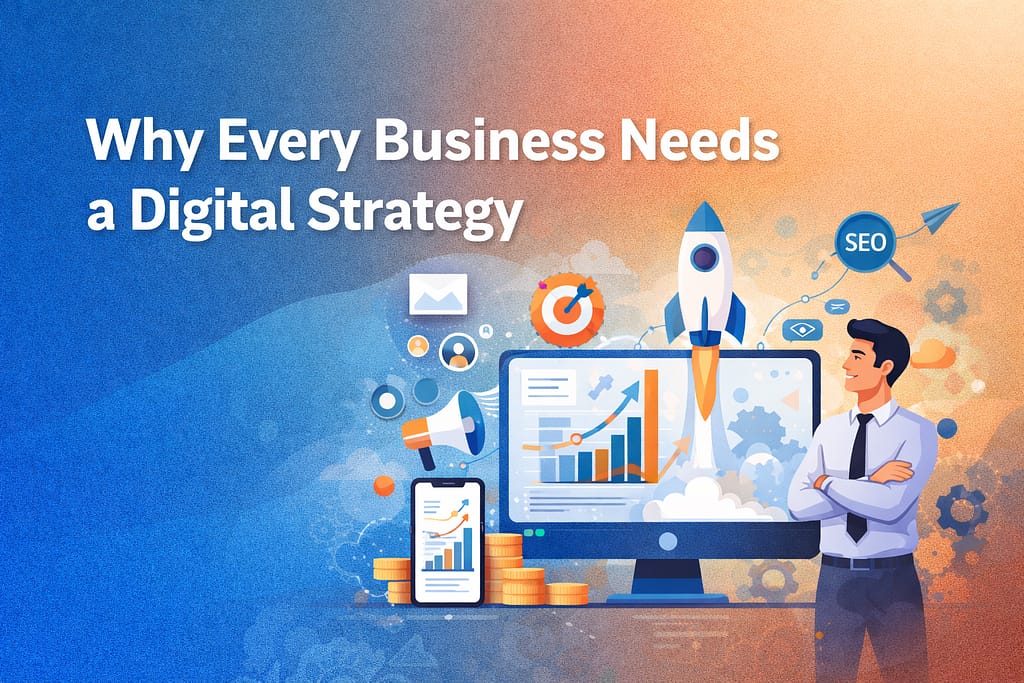
In today’s competitive marketplace, having a strong digital strategy is essential for sustainable online business growth. Consumers rely heavily on search engines, social media platforms, and online reviews before making purchasing decisions. Without a structured digital marketing strategy, businesses risk losing visibility, leads, and revenue to competitors.
A well-planned digital strategy aligns your online presence with your business goals, helping you increase brand visibility, improve customer engagement, and drive consistent lead generation.
Consumer Behavior Is 100% Digital-Influenced
In today’s fast-evolving digital landscape, a strong digital strategy for business growth is no longer optional—it’s a necessity. Modern consumers depend on search engines like Google, social media platforms, and online customer reviews to research products and services before making a purchase. Without a clear and results-driven digital marketing strategy, businesses can quickly lose online visibility, organic traffic, qualified leads, and revenue to more digitally active competitors.
A well-structured online business strategy connects your website, SEO efforts, content marketing, and social media marketing with your overall business objectives. By focusing on search engine optimization (SEO), brand visibility, customer engagement, and lead generation, businesses can create a sustainable system that drives long-term online growth and higher conversion rates.
Key Applications of Marketing Growth
Digital Strategy Aligns Marketing with Business Goals
Many businesses approach digital marketing without a clear strategy. Instead of following a structured digital marketing plan, they engage in scattered activities such as:
Posting occasionally on social media without a content strategy.
Running paid ads without proper audience targeting or keyword research.
Sending irregular email marketing campaigns with no automation.
Updating website content without SEO optimization or clear goals.
This unplanned approach to online marketing often results in low engagement, poor conversion rates, and wasted marketing budgets. Without a focused digital strategy for business growth, time and money are spent on activities that fail to generate measurable results or sustainable lead generation.
It Creates a Strong Competitive Advantage
Your competitors are already building their presence online. The real question is — are they using a more effective digital marketing strategy than you?
Businesses with a clearly defined digital strategy for business growth consistently:
Publish high-quality, SEO-optimized content.
Rank higher on search engines for targeted keywords.
Use retargeting ads to re-engage potential customers.
Automate lead nurturing through email marketing funnels.
Continuously optimize their conversion funnels for better ROI.
Without a structured online marketing strategy, your competitors will capture your target audience before you even reach them.
In highly competitive industries, online visibility equals opportunity. The brands that dominate search results, social media feeds, and paid advertising spaces are the ones that win customer attention — and ultimately, revenue.
Data-Driven Decision Making Improves Performance
Traditional marketing strategies were often based on assumptions and limited feedback. In contrast, a modern digital marketing strategy is powered by real-time data and measurable insights.
With advanced tools such as:
Google Analytics for website traffic analysis.
Search Console for SEO performance tracking.
CRM systems for customer relationship management.
Marketing automation platforms for campaign optimization.
Businesses can monitor and analyze critical performance metrics, including:
Traffic sources and acquisition channels.
Bounce rates and user engagement.
Conversion paths and sales funnels.
Customer lifetime value (CLV).
Paid advertising performance and ROI.
A data-driven digital strategy for business growth allows companies to make informed decisions, optimize campaigns continuously, and maximize conversion rates while reducing wasted marketing spend.
Enhances Customer Experience
Customer experience has become one of the most powerful competitive advantages in today’s digital marketplace. Brands that prioritize a seamless online journey stand out and build stronger customer loyalty.
A well-defined digital strategy for business growth helps businesses deliver:
Fast-loading, SEO-optimized websites.
Mobile-friendly and responsive web design.
Personalized email marketing campaigns.
AI-powered chat support and live assistance.
Smooth, secure, and user-friendly checkout processes.
When customers enjoy a frictionless digital experience, they are far more likely to complete purchases, engage with your brand, and become repeat buyers.
On the other hand, slow websites, poor mobile optimization, or complicated checkout systems increase bounce rates, reduce conversion rates, and damage brand trust. Investing in a customer-focused digital marketing strategy ensures higher engagement, improved retention, and sustainable online growth.
Improves Lead Generation and Sales Funnel Efficiency
Every business needs a predictable and scalable system for consistent lead generation. Without a structured approach, sales become unpredictable and growth slows down.
A well-planned digital marketing strategy organizes your customer journey into a clear conversion funnel:
Awareness Stage
At the top of the funnel, your goal is to attract potential customers through:
SEO-optimized blog content.
Engaging social media marketing.
Targeted paid advertising campaigns.
Consideration Stage.
Once prospects show interest, you nurture them with value-driven content such as:
Lead magnets (eBooks, guides, checklists).
Case studies that build trust.
Automated email marketing.
sequences.
Decision Stage
At the bottom of the funnel, you focus on converting leads into customers using:
Customer testimonials and reviews.
Product demos or consultations.
Retargeting ads to re-engage interested users.
Instead of relying on chance or inconsistent sales efforts, a strong digital strategy for business growth creates a systematic marketing funnel that attracts, nurtures, and converts prospects into loyal customers.
Increases Brand Authority and Trust
In today’s digital world, trust is established online long before any personal interaction takes place. Customers research brands, compare options, and evaluate credibility before making contact.
A well-executed digital marketing strategy builds brand authority through:
Educational, SEO-driven blog content.
Thought leadership articles and expert insights.
Positive customer reviews and ratings.
In-depth case studies showcasing real results.
Strong social proof across websites and social media platforms.
Businesses that consistently deliver valuable and relevant content position themselves as industry leaders. Over time, this strengthens brand credibility, online reputation, and customer trust.
When your audience trusts your expertise and sees proven results, pricing becomes less of an obstacle. Instead of competing solely on cost, you compete on value, authority, and proven performance.
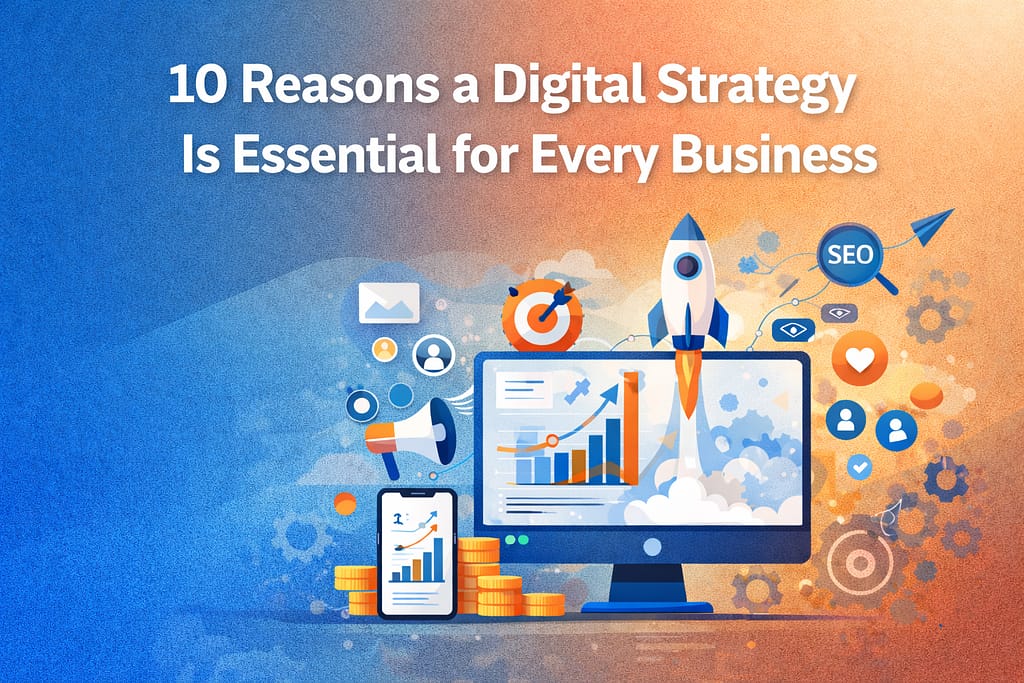
Supports Long-Term Sustainability
Marketing trends constantly evolve. Social media platforms update their features, search engine algorithms change, and new technologies reshape how customers interact with brands.
A well-defined digital marketing strategy prepares businesses to handle:
Sudden market shifts
Emerging technological advancements
Changing consumer behavior
Economic fluctuations and industry disruptions
With a structured digital growth strategy, businesses don’t simply react to change — they adapt proactively using data, analytics, and performance insights.
Companies that lack digital planning often struggle during uncertain times because they have no clear roadmap. In contrast, businesses with a strong online strategy remain agile, competitive, and positioned for long-term success.
Digital growth is never dependent on a single marketing channel. Sustainable online business success comes from integrating multiple digital marketing efforts into one cohesive strategy.
An effective digital marketing strategy combines:
Search Engine Optimization (SEO) to generate consistent organic traffic
Content marketing to educate audiences and build long-term trust
Social media marketing to increase engagement and brand awareness
Pay-Per-Click (PPC) advertising to drive instant, targeted visibility
Email marketing to nurture leads and maintain customer relationships
Conversion Rate Optimization (CRO) to improve website performance and maximize results
When these digital channels work together, they create a powerful and scalable growth engine. Instead of isolated campaigns, you build a unified system that attracts, nurtures, and converts customers efficiently — driving measurable and sustainable business growth.
We are committed to preparing individuals and organizations for long-term professional success.
FAQs
What is AI and automation in business?
Is AI suitable for small and mid-sized businesses?
Which industries benefit most from AI?
How long does AI implementation take?
What is a digital strategy in business?
Why is a digital strategy important for small businesses?
How does a digital strategy increase revenue?
Conclusion
In 2026 and beyond, having a well-defined digital marketing strategy is no longer optional — it is the foundation of sustainable business success. As competition increases and consumer behavior continues to shift online, businesses without a clear digital roadmap risk falling behind.
Companies that consistently outperform their competitors are those that:
Plan strategically with clear digital goals
Use data and analytics to guide decisions
Invest in the right digital marketing channels
Prioritize customer experience across every touchpoint
By combining SEO, content marketing, social media marketing, paid advertising, and conversion optimization, these businesses create a scalable system for long-term online growth.
If your business does not yet have a structured digital strategy for business growth, the best time to start is now. The digital landscape rewards brands that act early, adapt quickly, and think long term.
We are committed to preparing individuals and organizations for long-term professional success.

The Future of Digital Web Consulting: What Need to Know
The Future of Digital Web Consulting: What You Need to Know The digital landscape is evolving faster than ever. Businesses...
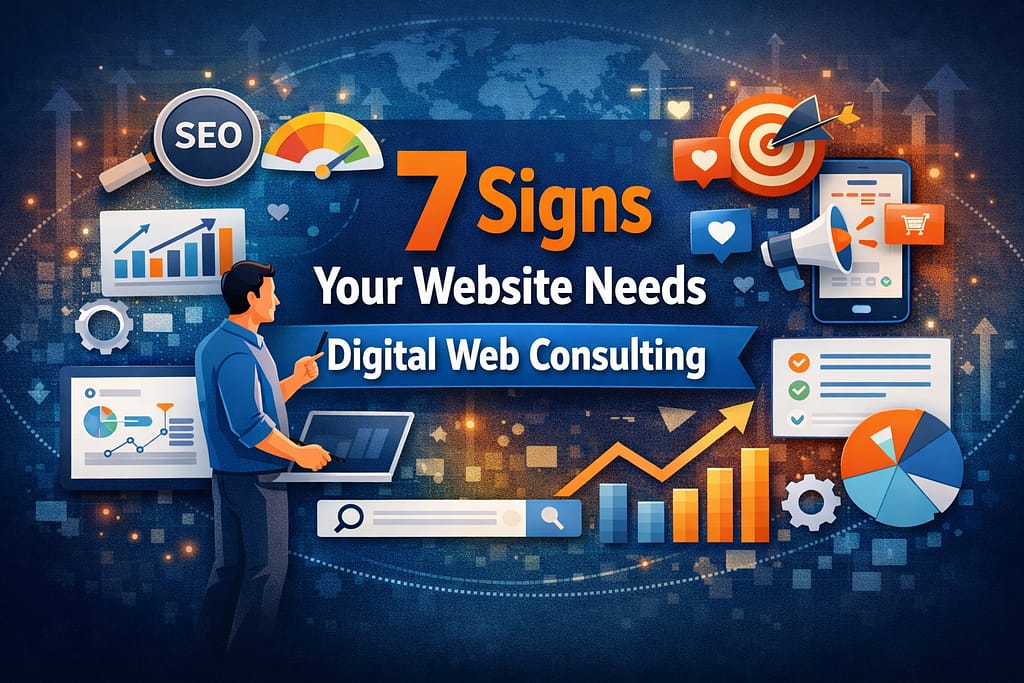
7 Signs Your Website Needs Digital Web Consulting
7 Signs Your Website Needs Digital Web Consulting In today’s competitive digital landscape, your website is more than just an...
7 Powerful Reasons Every Business Needs a Digital Strategy in 2026
Why Every Business Needs a Digital Strategy In today’s competitive marketplace, having a strong digital strategy is essential for sustainable...